How Much Can You Actually Make Renting a Big Bear Lake Cabin on Airbnb?
How Much Can You Actually Make Renting a Big Bear Lake Cabin on Airbnb?
The median Big Bear Lake Airbnb generated $38,000–$46,000 in gross annual revenue in 2025–2026, according to multiple STR analytics platforms. After property management fees (25–35%), property taxes (~1.3% of purchase price), STR insurance, permits, maintenance, and utilities, a typical 3-bedroom cabin purchased at $650,000–$700,000 may net $5,000–$15,000 per year before debt service. Whether the numbers work depends on bedroom count, amenities, location within Big Bear, and your management approach. A hot tub, four or more bedrooms, and a strong management company are the most reliable ways to improve the return.

The number you'll hear most often is "$38,000 to $46,000 a year."
That's the gross revenue figure multiple STR data platforms are reporting for the average Big Bear Lake short-term rental in 2025–2026. And yes, there are cabins doing significantly more — a four-bedroom with a hot tub, strong photos, and a good management company can hit $54,000 or higher. A six-bedroom group retreat can push past $120,000.
But if you're buying a cabin specifically to rent it on Airbnb, gross revenue is only the first number that matters. The real question is what you actually keep after expenses.
Let me walk you through the math the way I walk through it with every investor client who calls me.
What the Revenue Data Actually Shows
The two most widely cited STR analytics platforms — AirROI and Airbtics — both track Big Bear Lake listings, and their 2025–2026 data tells a consistent story. With roughly 2,474–2,834 active short-term rental listings in the market, Big Bear runs at an average occupancy of 27%–38% depending on the dataset. That translates to nightly rates ranging from $319 to $454, with the wide range explained almost entirely by property size.
Here's a more useful breakdown by bedroom count:
- 1 bedroom: ~$12,000–$15,000/year gross
- 3 bedrooms: ~$35,000–$40,000/year gross
- 4 bedrooms: ~$54,000/year gross
- 6+ bedrooms: ~$120,000/year gross
Seasonality is real and dramatic. December is the peak month, with average monthly revenue around $5,000 per listing — ski season drives that. January runs close behind at $4,200. Summer delivers a strong secondary peak in July and August at roughly $3,200–$3,300 per month. Spring and fall are softer; expect occupancy in the 15%–25% range during those months.
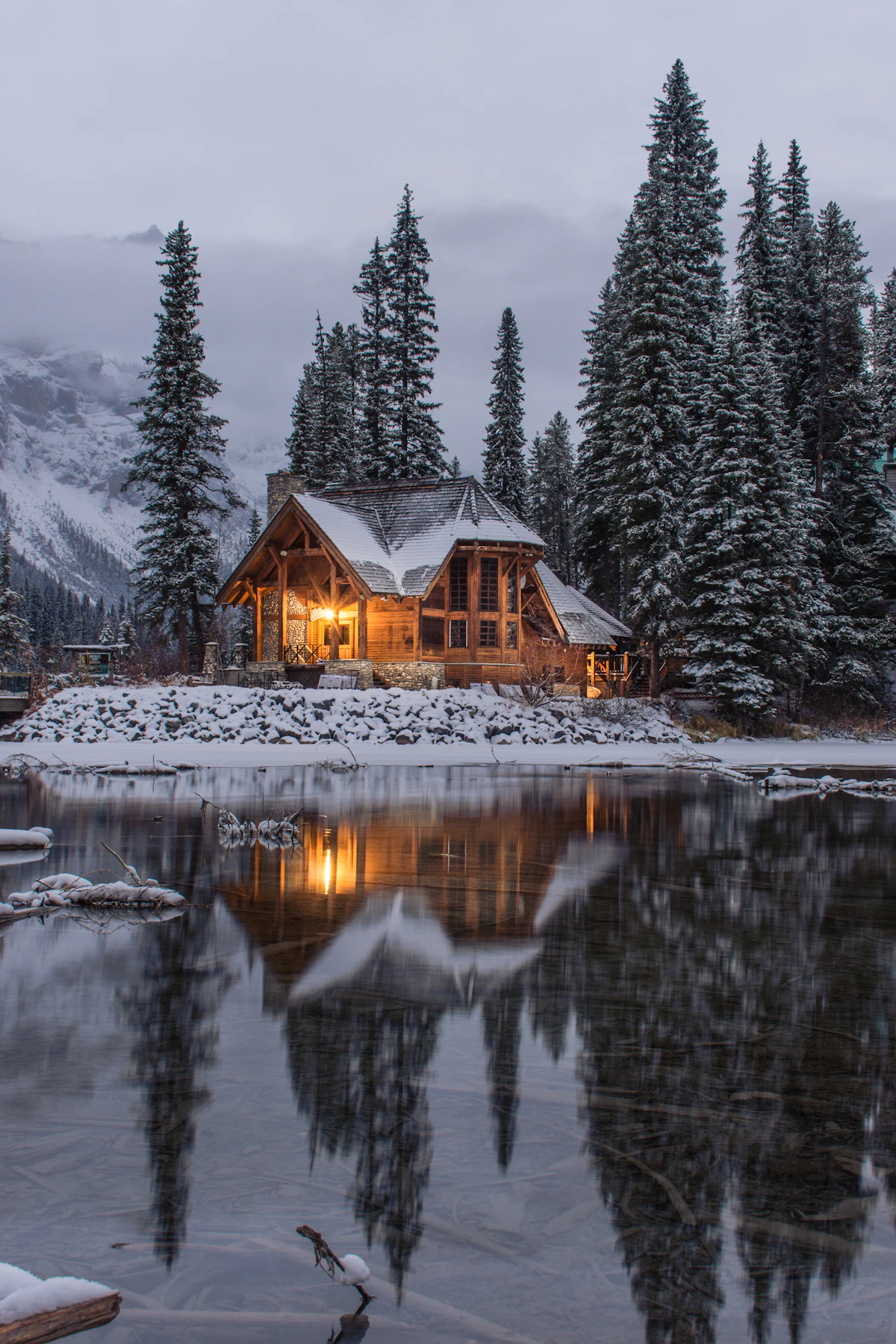
The amenity effect is significant. A hot tub alone can add 15–25% to your nightly rate and occupancy in a market where guests actively filter for that feature. A game room, direct lake access, or proximity to Bear Mountain or Snow Summit moves the needle too. Don't buy a cabin and add a hot tub as an afterthought — look for it in the listing or budget for installation before you close.
The Real Expense Stack
Here's where a lot of buyers get surprised. The gross revenue figure on every data platform is before expenses — and the expenses in Big Bear are specific and meaningful.
Property management. If you're not local and can't manage the property yourself, you're looking at a professional management company. In Big Bear, full-service management costs 25–35% of gross rental revenue. On a cabin generating $40,000/year, that's $10,000–$14,000 off the top before you touch any other cost. The top management companies here — Destination Big Bear, Big Bear Cool Cabins, Big Bear Vacations — run tight operations and generally protect occupancy, so it's not a bad trade, but it's a real one.
Property taxes. California's Prop 13 sets your base rate at 1% of purchase price, plus local assessments. Your effective rate in Big Bear typically lands around 1.3%–1.4% of what you paid. On a $700,000 cabin, that's $9,100–$9,800 per year, due every year regardless of how many nights you book.
The STR permit. The City of Big Bear Lake (92315) charges $550/year for your vacation rental permit under Ord. 2023-518. The county (92314) charges $667 for the STRRP. This isn't a major expense line, but the permit is mandatory before your first booking — and you need to confirm permit availability before you make an offer on a 92315 property — here's what investors need to know about the current STR licensing process.
Transient Occupancy Tax (TOT). Good news: guests pay this, not you out of pocket. The City of Big Bear Lake charges 10% TOT plus a 3% Big Bear Lake Tourism Business Improvement District (BBLTBID) assessment — 13% total — collected at booking and remitted monthly by you or your management company. It's a bookkeeping obligation, not a profit reduction, as long as your platform collects it correctly and you remit on time.
Insurance. A standard homeowners policy does not cover STR activity. You need either an STR-specific policy or a commercial landlord rider. Budget $2,500–$5,000/year for a properly covered mountain cabin. Fire risk in the San Bernardino Mountains means carriers price this carefully — some properties require FAIR Plan involvement, which adds complexity and cost at renewal time.
Hot tub and maintenance. If your cabin has a hot tub (and it should), budget $100–$150/month for weekly service, plus around $80 for occasional dump-and-fill refills. Snow removal runs $30–$175 per plow depending on storm size and driveway length. Deep cleaning is required two to four times per year at $150–$500 per session. Light bulbs, appliances, linens, and furniture add up faster in a rental than in a personal home.
Utilities. Electric, gas, water, and internet — the basics guests expect. Mountain cabins run $200–$400/month in utilities during peak winter months. Plan for $3,000–$5,000/year in utility costs, even accounting for guest-facing fees at checkout.
Running the Numbers on a Real Scenario
Let me put this together with a concrete example.
Say you buy a 3-bedroom cabin in Sugarloaf or Fox Farm at $650,000 — a realistic entry point for a STR-capable property in the county (92314). Based on current market data, you can reasonably project $35,000–$40,000 in gross annual revenue with a competent management company.
| Expense | Annual Estimate |
|---|---|
| Property management (30% of $38K gross) | $11,400 |
| Property taxes (1.35% of $650K) | $8,775 |
| STR insurance | $3,000–$5,000 |
| STR permit (county STRRP) | $667 |
| Maintenance & repairs (1.5% of value) | $9,750 |
| Utilities | $3,600–$4,800 |
| Hot tub service & snow removal | $2,000–$3,000 |
| Total Estimated Expenses | $39,192–$43,392 |
On $38,000 in gross revenue, you're close to breakeven before mortgage payments. On $40,000+, you're generating a small cushion. This is exactly why property selection is so critical — the incremental bedroom and the amenity package often determine whether the investment pencils out at all.
A 4-bedroom property at $750,000 generating $54,000/year gross is a fundamentally different investment than a 3-bedroom at $650,000 generating $38,000 — even though the purchase price is only 15% higher. The math on the 4-bedroom works more cleanly because the revenue jump from that extra bedroom outpaces the cost increase.
What the Market Investability Data Tells You
Airbtics gives Big Bear Lake a D+ market investability grade — placing it in the lowest 4% nationally for short-term rental yield. A separate analytics platform tracks a similar story: a 33/100 investment score driven by the gap between acquisition costs and market-wide revenue levels.
That's not a reason to avoid Big Bear. But it is a reason to be precise about which property you buy and how you structure the hold.
The investors who do well here go in with clear expectations: the STR income is best understood as a partial offset to carrying costs, not a standalone income stream. Property appreciation, personal use, and the lifestyle component of owning a Big Bear cabin are real parts of the investment case — they just don't show up in a cash-on-cash yield calculation.
If you're financing this as a second home vs. an investment property, the loan classification changes your mortgage rate and down payment requirement — which directly affects your monthly carrying cost and whether the net income math holds. That distinction matters before you start running projections.
And if you eventually sell, know that capital gains tax on a Big Bear vacation home or STR is more complex than on a primary residence — the Section 121 exclusion doesn't apply, and California taxes gains as ordinary income.
What Makes a Big Bear STR Actually Work
In my experience with STR investors in this market, the properties that consistently perform share a few traits:
- Hot tub is non-negotiable. It adds 15–25% to nightly rates and is the first filter guests apply when searching. It's the single highest-impact amenity in this market.
- Four or more bedrooms outperform on a per-dollar basis. Group bookings drive winter weekends, and the ADR premium for a 4-bedroom doesn't just scale linearly from a 3-bedroom — it jumps. The revenue differential often justifies the price premium.
- Location within Big Bear matters. Fox Farm and Sugarloaf (92314) often have lower entry prices than 92315 city properties, but confirm STR permit availability under the county's STRRP program before you buy either.
- Professional management from day one. Self-managing a cabin you don't live near is a full-time job. The 30% management fee is real, but so is the occupancy rate difference a top company delivers — especially in shoulder seasons when listings compete hard for bookings.
- Buy to hold, not just for cash flow. Big Bear has appreciated meaningfully over the past decade. The STR income is best modeled as carrying-cost offset, with appreciation and lifestyle use as the core thesis over a 5–7 year horizon.
The investors I've seen struggle are usually chasing the gross revenue number without building the full expense model first. Build the model, then find the property that fits it — not the other way around.

Running these numbers carefully before you buy is the step most investors skip. They see the gross revenue figure, do rough mortgage math, and move forward — and then the expense reality arrives six months in.
The right approach is to build the model from the top down: gross revenue projection by bedroom count and amenities, subtract management fees, property taxes, insurance, maintenance, and debt service. What's left is your real return. That process starts with the right property — and knowing which ones in Big Bear actually support the numbers.
Want to underwrite a specific Big Bear property before you commit?
I walk STR investors through this analysis before we make any offer.
This post is for informational purposes only and does not constitute financial, tax, or investment advice. STR revenue and expense figures are market-level estimates based on third-party data platforms (Airbtics, AirROI, Destination Big Bear) and may not reflect the performance of any specific property. Permit rules, TOT rates, and ordinance details are subject to change — verify current requirements directly with the City of Big Bear Lake or San Bernardino County before purchasing. Rachael Smith-Meadors, DRE #01923537, is a licensed California Real Estate Broker Associate. No guarantee of income or investment return is expressed or implied.


Comments
Post a Comment